Revisiting sacrificial prototypes
When I was learning/teaching at the d.school, we had the concept of a sacrificial prototype. (Which I also recall, when I said to my team in India, they were totally confused and thought about me talking about some kind of ritual sacrifice).
If a prototype is something you create to answer a question or to learn something, a sacrificial prototype is something that is made to be thrown away.
I am in the midst of learning two skills: baking and sewing. And there are two things I notice. I have been postponing making pate d'choux forever, even though it is something I really want to try. And I have bought a pattern to sew underwear on Etsy but I haven't started working on it.
Why? One of the reasons (my reasons at least) because it is more unfamiliar than what I already know. Pate choux requires making a cooked dough, which I haven't tried. Underwear uses knitted fabric which I haven't worked with. It's new territory and I know I want to get it right. And as much as I know intellectually, that there is no getting better at something without working at it, without fucking up, the small scared perfectionist creature within me still wants to win to succeed to get it right the first time. And in fact it did take failed baked and wrong stitches to learn. And wince at the thought of those errors. I have been trained to accept the real and psychological costs and benefits of prototyping.
It's like when we teach people prototyping, and encourage them to see more and more of life and work as a prototype and we are asking them to build their emotional/psychogical chops to have zero sunk cost fallacy and when things don't work, take the learning and move on. Because, it's all just a prototype.
But how you feel about the "cost" of prototyping is so dependent on the resources you have at hand.
The founder of the company I last worked at raised over a billion dollars in venture capital. He used to be so nonchalant about starting a new business or launching a new feature and then killing it when it didn't work out. The cost of that experiment was nothing given the resources he had.
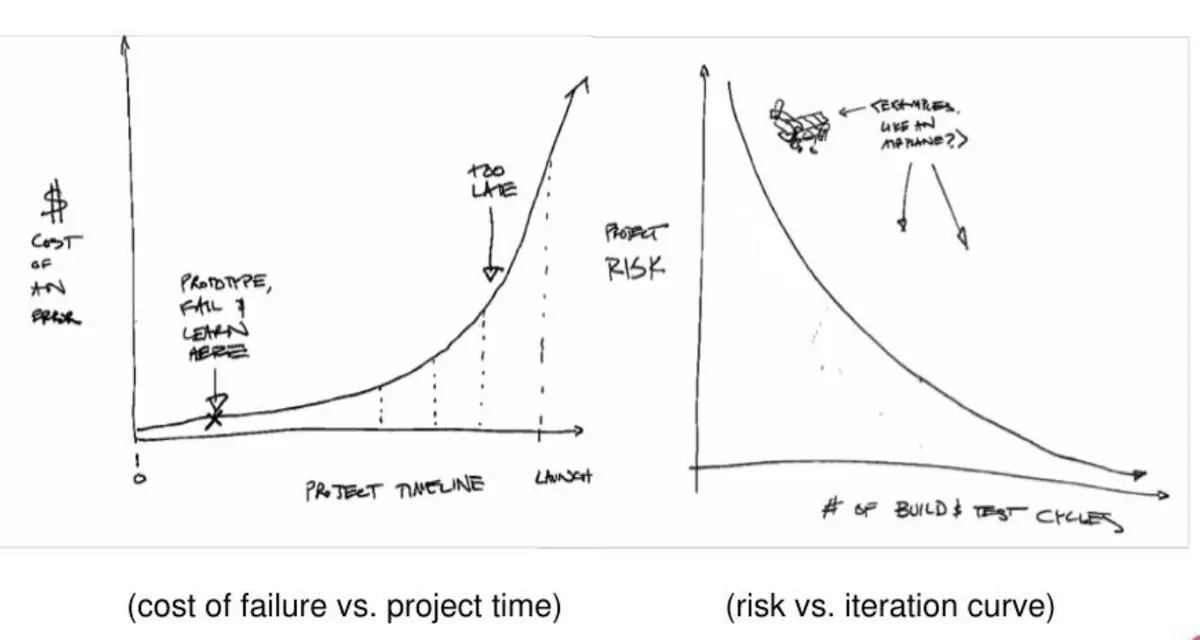
From here: https://www.slideserve.com/siusan/prototyping
In that vein, by forcing yourself to say, this is a throwaway prototype, you will keep the costs and resources low. I don't need to use the fanciest chocolate chips for my first attempt. Sacrificial is meant to be thrown. Instead of using the nice knit fabric I bought from the fabric store, I should use the shittiest old t-shirt and use that to create the pattern, fully knowing I am going to throw it away. I should bake a batch of choux pastries, and just throw it away. And the moment I allow that EXPLICITLY, I can breathe, there is less riding on this first attempt. There is no pressure to succeed.
Which made me think: how broadly can I apply this concept? I am working on launching a new business, in the past I have launched businesses and failed, and the psychological costs have been massive. Of course, I want to succeed when I have put all this time, money, effort into a business. But what if my first version of the business is sacrificial. It's meant to be thrown away, so I don't need to get things perfect. I just need to go through one cycles.